Experiments
GHK-Cu repair experiments
Copper outside a nerve cell, copper bound to a repair peptide, copper retained in tissue. The experiments give the metal different locations and different jobs.
Nerve cells and support cells
The 2024 metal-aggregation experiment studied neurons, microglia and astrocytes in culture. Microglia and astrocytes are support cells in the nervous system. The study examined copper- and zinc-induced protein clumping and cell death; free GHK sequestered extracellular copper and blocked its intracellular accumulation. The tested copper-induced DLAT aggregation was completely prevented.
The precision of that explanation appeals to me. Protection arose from controlling the metal's availability outside the cells. The study began with copper-free GHK, so it cannot establish that administering GHK-Cu would reproduce the response in a human nervous system. Brain-disease treatment and distribution of the intact copper complex remain further questions.
The antioxidant biochemistry review describes another setting: intact GHK-Cu blocked copper-dependent oxidation of LDL in laboratory assays. Those results help explain the interest in copper handling while leaving different mechanisms and preparations visible.
Cultured fibroblasts and collagen
The 1988 fibroblast experiment remains a satisfying piece of GHK-Cu research. Collagen synthesis rose as the concentration increased, reaching a peak without a change in cell number. Collagen supplies tissue with structural support. The experiment located a change in what the cells produced, with cell proliferation held apart from that finding.
I admire that economy. The observation has a defined setting and a fairly narrow meaning. Reviews extend the repair picture to elastin, moisture-holding substances and the proteins that regulate removal of old tissue, but the step from cultured cells to a useful cream still requires its own experiments. The skin studies are where that step becomes tangible.
Lung cells and mouse inflammation models
In a separate experiment, fibroblasts from people with emphysema regained collagen-gel contraction after receiving GHK. The tested concentration was 10 nanomoles per liter. The cells were outside the patients' bodies; the outcome was their ability to pull a gel together. I regard a restored physical cell behavior as a more substantial clue than an isolated change in gene activity, although breathing and recovery in patients remained untested.
The animal work asks other questions. GHK reduced inflammatory and fibrotic changes in mice with bleomycin-induced lung injury. A 2025 GHK-Cu study in mice with experimental colitis reported lower inflammatory signals and preservation of proteins involved in the intestinal barrier. The former used GHK; the latter used GHK-Cu. Both concern induced disease in mice. A human treatment course would need direct evidence of its own.
Genes and aging
The 2018 gene-data review reports changes reaching a 50%-or-greater threshold, with activity increased in 59% of affected genes and decreased in 41%. The detailed threshold count covers about 2,100 genes; the often repeated 4,000-gene figure is an extrapolation. Within the protein-clearance group, 41 genes increased and 1 decreased. These are gene-expression and database findings requiring validation at the protein level in living systems.
The leap from those measurements to a lasting change in aging troubles me. Activity measured in cultured cells needs validation at the protein level and in living systems before a useful clinical outcome can be established. The age-related plasma figures—about 200 nanograms per milliliter at age 20 and about 80 nanograms per milliliter at age 60—describe endogenous GHK. They establish neither a replacement amount nor a benefit from replacement.
Much of the foundational and review literature comes from Loren Pickart and colleagues. Replication of the broad gene-expression and anti-aging claims by other groups remains limited. Results reproduced by another group would narrow my doubts about those broader claims.
Hair counts after 6 months
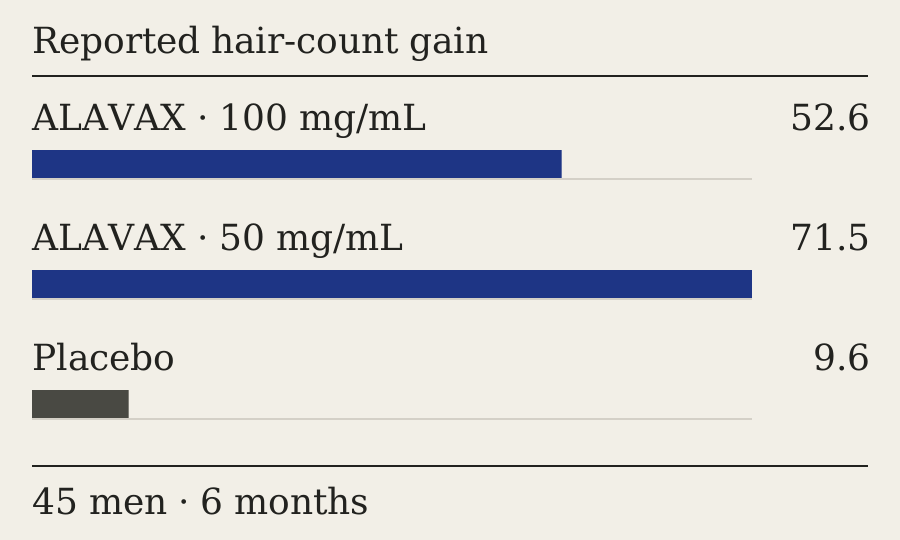
The ALAVAX trial enrolled 45 men with androgenetic alopecia and tested a complex containing 5-aminolevulinic acid and GHK. After 6 months, reported hair-count gains were 52.6 for the 100 milligrams per milliliter mixture and 71.5 for the 50 milligrams per milliliter mixture, compared with 9.6 for placebo. No adverse events were reported in any group.
Those are concentrations of the studied combination. The experiment cannot assign the gain to GHK-Cu alone, establish a personal amount or supply a regrowth deadline. The lower concentration's larger reported gain weakens the casual assumption that more ingredient must produce more benefit. The trial's duration describes its observation window. It leaves the fate of the peptide between applications unmeasured.
Gels, fibers and coated scaffolds
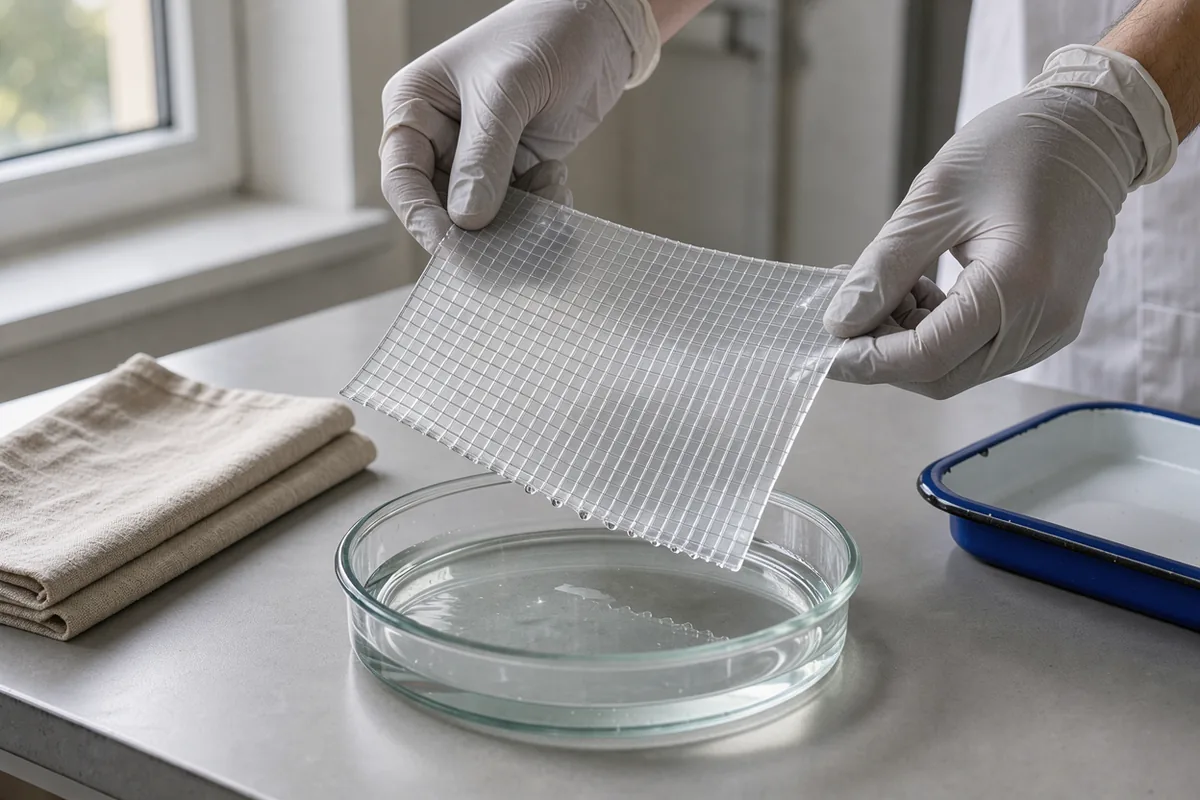
Some of the most inventive experiments put GHK into a material. GHK-modified alginate helped human mesenchymal stem cells release growth-supporting proteins in culture, without cytotoxicity across the tested 1–500 nanograms per milliliter range. A GHK-Cu-coated scaffold supported more viable human dermal fibroblasts after 3 days and showed activity against tested bacteria within 1 hour.
A nanofiber-containing hydrogel study combined mouse wound models with human fibroblast experiments and reported improved wound repair and blood-vessel growth. These preparations make the material around the peptide consequential. I welcome that practical inventiveness, while reserving judgment about wounded patients until patient trials test the same preparation and outcome.